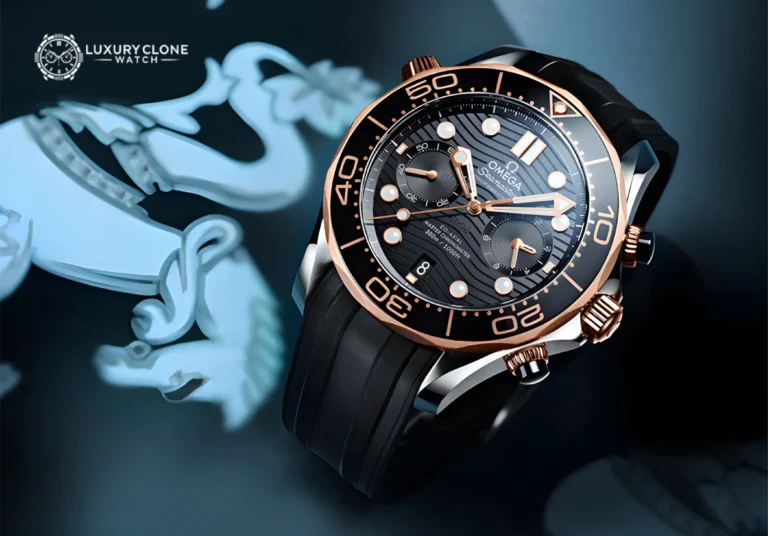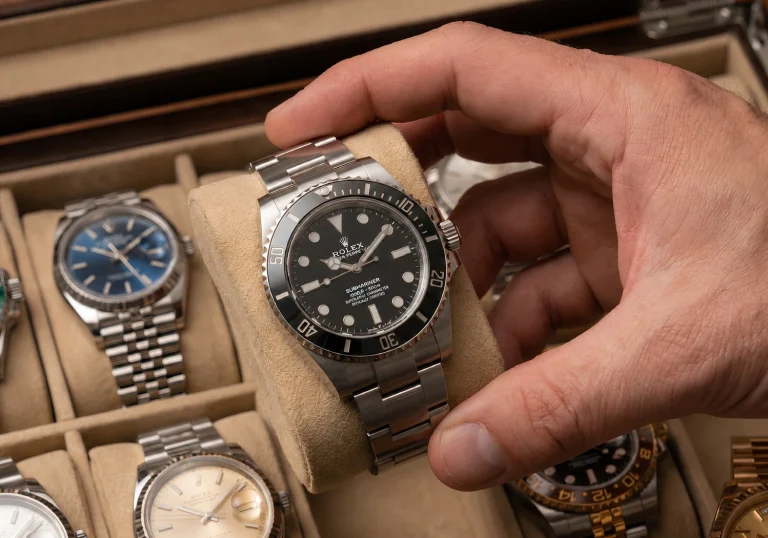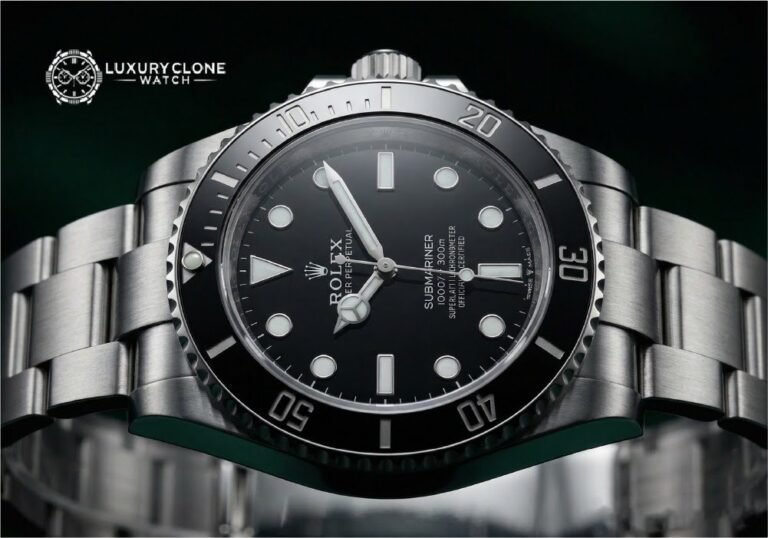
Luxury watches are mostly evaluated based on the looks on the surface, yet the actual distinction between a true timepiece and a super clone watch lies deeper. It boils down to materials, internal movements, and the process of engineering and assembly of each component.
Current superclones watches offer the best quality, being made in such a way that they imitate authentic Swiss watches, not only in look but also in functionality on the wrist. Nevertheless, you still find significant differences that are present in terms of the quality of steel, construction of movements, and the overall finishing standards.
These differences will be disaggregated in this article in a very simple and straightforward manner so that you can know how the superclone watches would be compared to genuine luxury watches in real technical terms.
904L Steel vs Standard Stainless Steel
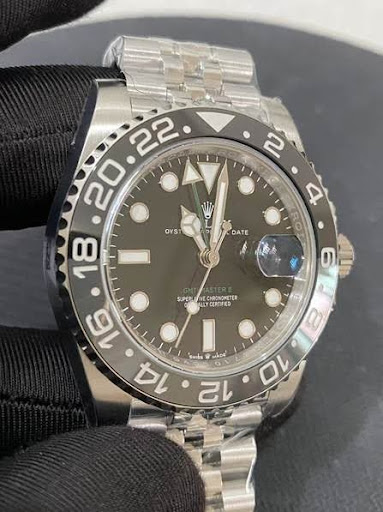
A major distinction between super clone watches and the true luxury watches is the stainless steel material used to construct them. Another common type of high-end luxury brand, most notably Rolex, employs 904L stainless steel, which has high corrosion resistance and high-quality finishing. This material is structured to work in extreme conditions and still have a rich, long-lasting shine.
The majority of standard watches, as well as many superclone watches, are made with 316L stainless steel. This is a hard material that is durable and is commonly used in the watch industry; it is less corrosion-resistant than 904L, though. Both materials may appear almost identical in the real world, although 904L may be more polished, and its surface reflection is slightly finer.
Put simply, 904L steel is regarded as more upscale due to its durability and finishing depth, whereas 316L is a viable and dependable choice in terms of most watch construction. This difference is not necessarily apparent to the human eye, but it becomes apparent with time, particularly as the watch is worn, subjected to moisture and everyday use.
Clone Movements vs Genuine Calibres

Genuine Swiss Movements Overview
Genuine Swiss watch movements are built with extremely high precision and strict manufacturing standards. Such brands as Rolex, Omega and Patek Philippe model their calibres with the purpose to provide long-term reliability, smoothness of work and precision of time keeping for years. Every movement is made up of well-finished, moulded components which have been tested to ensure that they are durable and consistent.
Clone Calibres in Superclone Watches
Super clone watches operate high-quality imitation movements that are created to simulate the design and operation of authentic Swiss movements. These movements, like VS-series calibres, are designed to emulate automatic winding, rotor motion and general mechanical operation. They are not exactly Swiss movements, but they are designed to be very similar to the feel and operation of the luxury watch engines.
Beat Rate and Mechanical Feel
The beat rate is one of the major similarities between clone and genuine movements and is usually set at about 28,800 vibrations per hour. It forms a seamless sweeping seconds hand that looks similar to expensive Swiss watches. But the reality of movements remains more stable over the long term, with finer finishing as well as more sophisticated internal engineering, when scrutinised with a microscope.
Why Understanding Movements Matters Before Buying
Now it is evident that the quality of movement is directly proportional to the way a watch works in real life. It is because a seasoned buyer never stops at the surface and will learn internal features before making a purchase.
If you want a deeper breakdown of how all these technical factors affect real purchasing decisions, including what to check before buying, you can find out the in-depth super clone watch buying guide.
Finishing, Casework & Assembly
The completion and casework contribute significantly to the distinction between super clone watches and authentic luxury watches. Although both of them might sound extremely alike at first sight, the difference becomes even more obvious when you take a closer look.
Authentic watches are made to very high tolerances; that is, every edge, curve, and surface transition is tight. This leads to perfectly aligned cases, transitions in finishing, and quality assembly.
CNC-machined cases and multi-stage finishing methods are also applied to high-end superclone watches to imitate this appearance. Painting and polishing are done with attention to the design, and bracelets are made to be solid and comfortable on the wrist. There is also a lot of consideration of the alignment of dials, and thus a clean appearance.
Nonetheless, on closer examination, true watches still have a minor lead in finishing sharpness, edge refinement, and uniformity of all components. Such minor variations can only be commonly seen with trained eyes or with magnification.
Weight, Feel & Wrist Presence Comparison
One of the most noticeable differences between genuine luxury watches and superclone watches is how they feel on the wrist. Two watches may appear nearly identical, but the weight distribution and the general balance may at times make a difference in construction.
Authentic watches are meticulously designed in terms of material density and the weight of components. All the components, including the case, bracelet, etc are crafted to form a comfortable feel that fits the wrist well. Such accuracy is achieved due to high standards of manufacturing and prolonged design development.
Super clone watches priced at the high end attempt to recreate this experience by attempting to match case sizes, bracelet design, and weight as closely as possible. They are often quite similar in feel, particularly in everyday wear.
In general, visual similarity is very high, but the true watches tend to have a more sophisticated and perfectly balanced wrist presence that can be felt in a close comparison or when used over time.
Conclusion
When superclone watches are compared with true luxury watches, the actual differences are limited to three main aspects: materials, movement, and finishing.
Authentic watches incorporate the finest Swiss engineering, high-grade steel, and the highest quality standards of assembly. Instead, Superclone watches specialise in making these aspects as authentic as possible with high-tech production methods, clone calibres, and CNC-cut cases.
While high-end superclones can look and feel very similar in everyday use, small differences still exist in long-term engineering depth and finishing precision.