Walk into any serious watch forum or private collector group, and the topic eventually comes up: super clone watches. Not the obvious, lightweight knockoffs sold on street corners, but the highly engineered replicas built to mirror genuine pieces down to movement architecture and case proportions.
A “super clone” is designed to replicate not just the look of a luxury watch, but the mechanical experience. That means cloned automatic movements, accurate case thickness, correct weight distribution, and even near-identical finishing under magnification.
But not all luxury watches are replicated equally.
Certain brands dominate the super clone watch brands market for very specific reasons, such as resale value, scarcity, brand prestige, and mechanical design. In this guide, we’ll break down which brands are copied the most, why they’re targeted, and how replication quality differs across manufacturers.
Check out the difference between a Super Clone and a Replica Watch
1. Rolex
No brand comes close to Rolex in the super clone world. It accounts for an estimated 70–80% of the entire high-end replica market. If someone is searching for the best superclone watch brands, they’re almost always starting here.
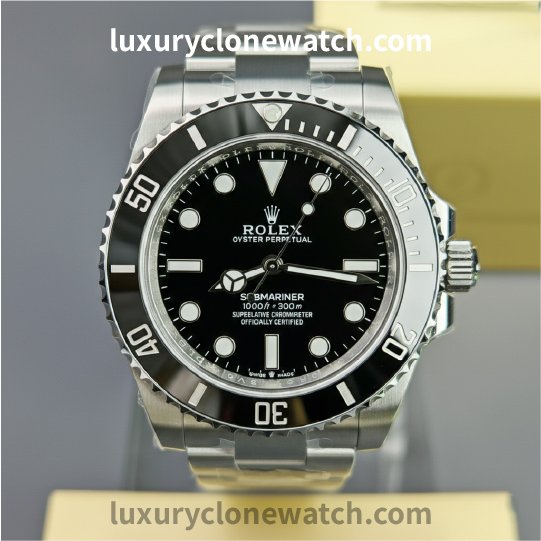
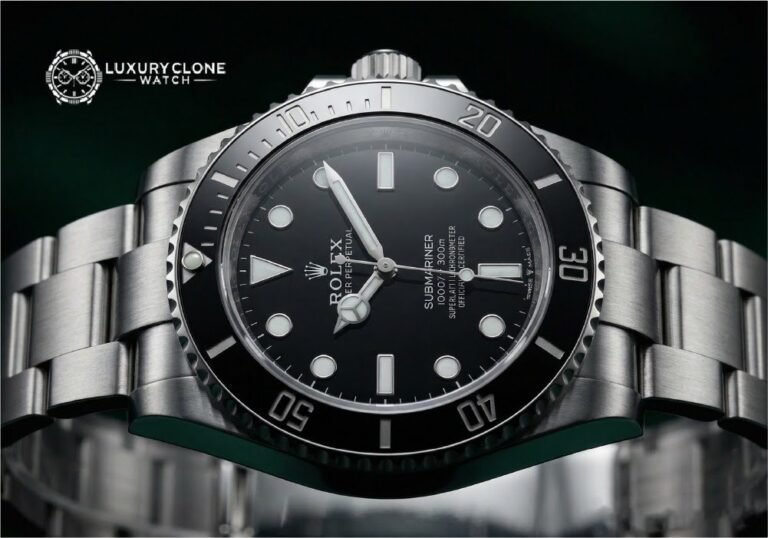
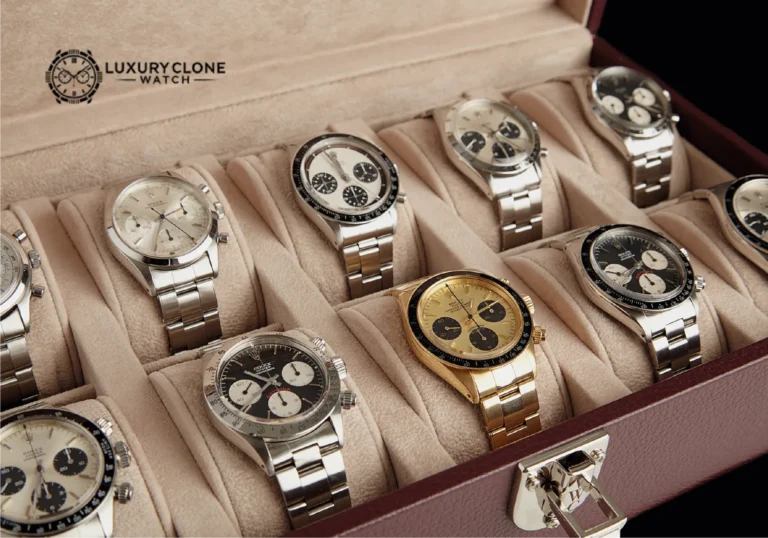
Most Copied Models: Submariner, Daytona, GMT-Master II, and Datejust
These models sit at the center of modern watch-collecting culture. They’re recognizable, liquid on the resale market, and often unavailable at retail due to long waitlists.
To understand the demand gap, it helps to explore why Rolex watches are so expensive in the first place.
Why Rolex Dominates
Rolex watches combine three powerful factors:
- Massive global demand
- Limited retail availability
- Strong secondary market pricing
That gap between desire and access creates the perfect environment for replication.
Factories like VSF and Clean have invested heavily in cloning Rolex’s 3235 and 4130 movements. These aren’t basic ETA swaps but actually structurally mirrored mechanical systems designed to function like the genuine calibers.
Several of the best super clone factories specialize almost exclusively in refining Rolex movements.
Rolex also has the most refined replica evolution cycle. You’ll see “V1, V2, V3” versions of the same model, each correcting tiny flaws. No other brand has that level of iteration.
Many buyers also wonder, are fake Rolexes worth anything, especially when higher-tier super clones are involved? It definitely is.
2. Patek Philippe
If Rolex is volume, Patek Philippe is prestige. Patek represents the “holy grail” tier of horology — thin cases, intricate finishing, and understated design language. That also makes it significantly harder to replicate properly.
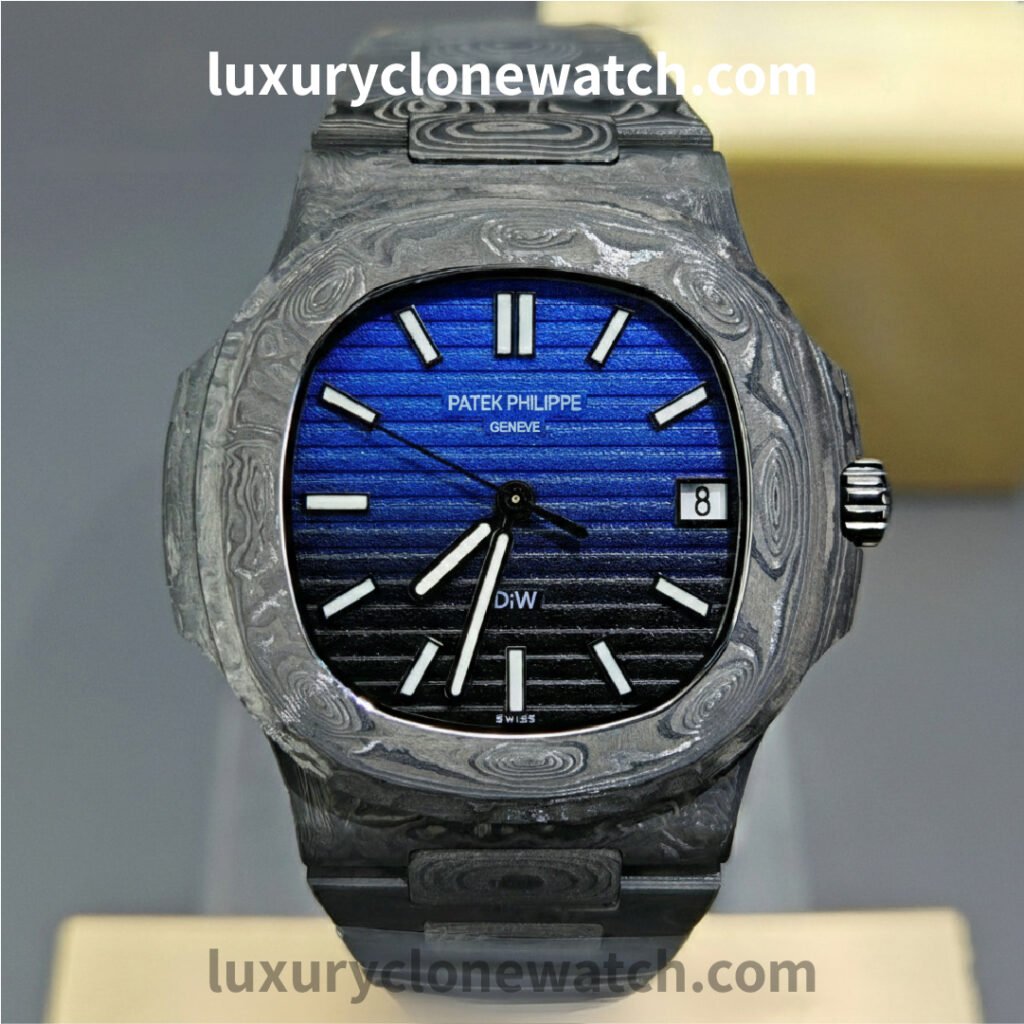
Most Copied Models: Nautilus (5711, 5811) and Aquanaut
The discontinued Nautilus 5711 alone reshaped the replica market. Its resale prices skyrocketed, and demand didn’t slow.
The Breakthrough: For years, Patek clones were noticeably too thick. The original Nautilus measures around 8.3mm, incredibly slim for a steel sports watch.
Factories like 3K and PPF developed the Super Clone 324 SC movement, allowing case thickness to finally match the genuine profile. That was a turning point.
Even so, Patek remains slightly easier to identify compared to Rolex due to movement finishing and decoration details.
3. Audemars Piguet
In the integrated bracelet sports watch category, Audemars Piguet leads the way.
The Royal Oak design is architectural. Sharp bevels. Brushed surfaces. Mirror-polished edges. Every detail reflects light differently — and that’s exactly what super clone makers try to capture.
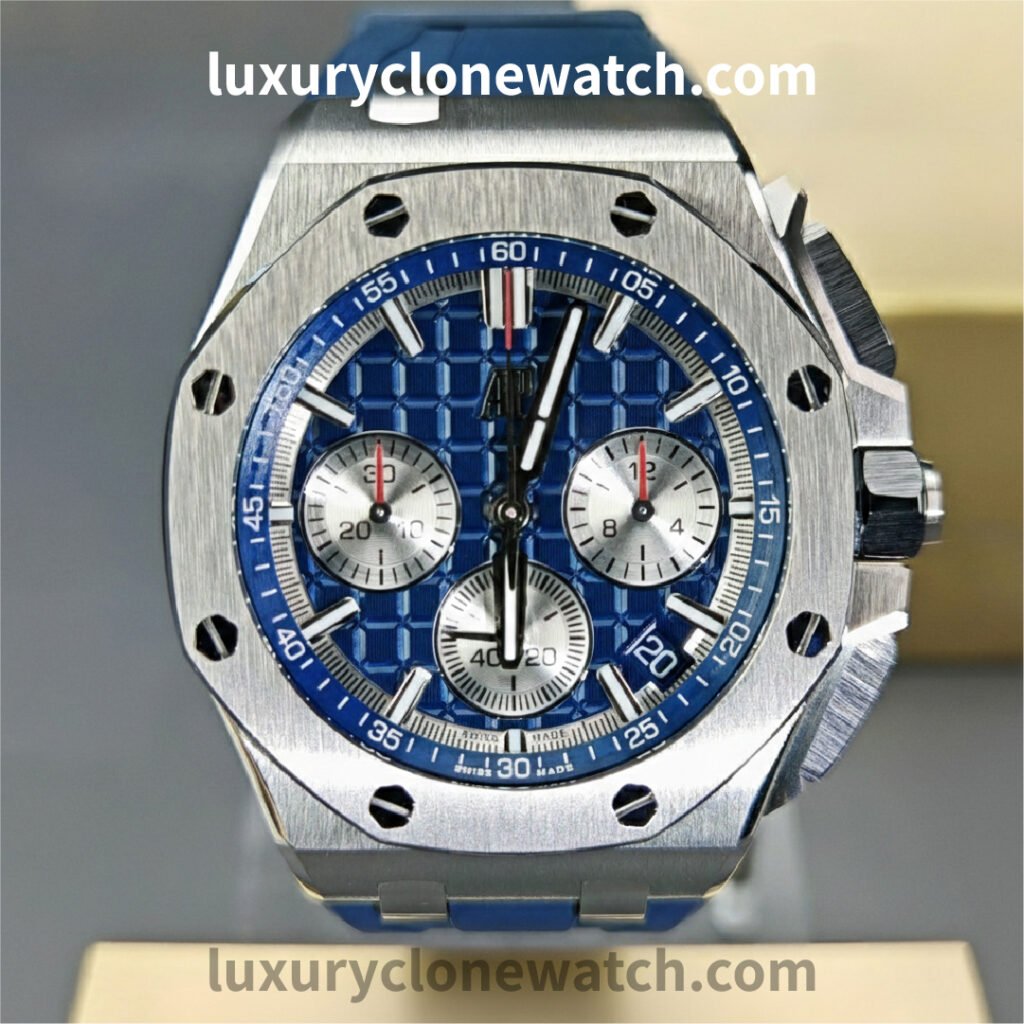
Most Copied Models: Royal Oak 15400, Royal Oak 15500, and Royal Oak Offshore
The Real Challenge: With AP, it’s not just about the movement. It’s about finishing.
The “Tapisserie” dial pattern, that signature waffle texture, must reflect light correctly. The bracelet edges must transition smoothly between brushed and polished surfaces. Any inconsistency gives it away.
ZF and APS Factory currently lead this category, especially with ultra-thin automatic movements designed to replicate the original calibers.
4. Omega
Omega sits in an interesting position. It’s highly respected in horology, but more accessible at retail compared to Rolex.
That means replication demand focuses primarily on its dive watches.
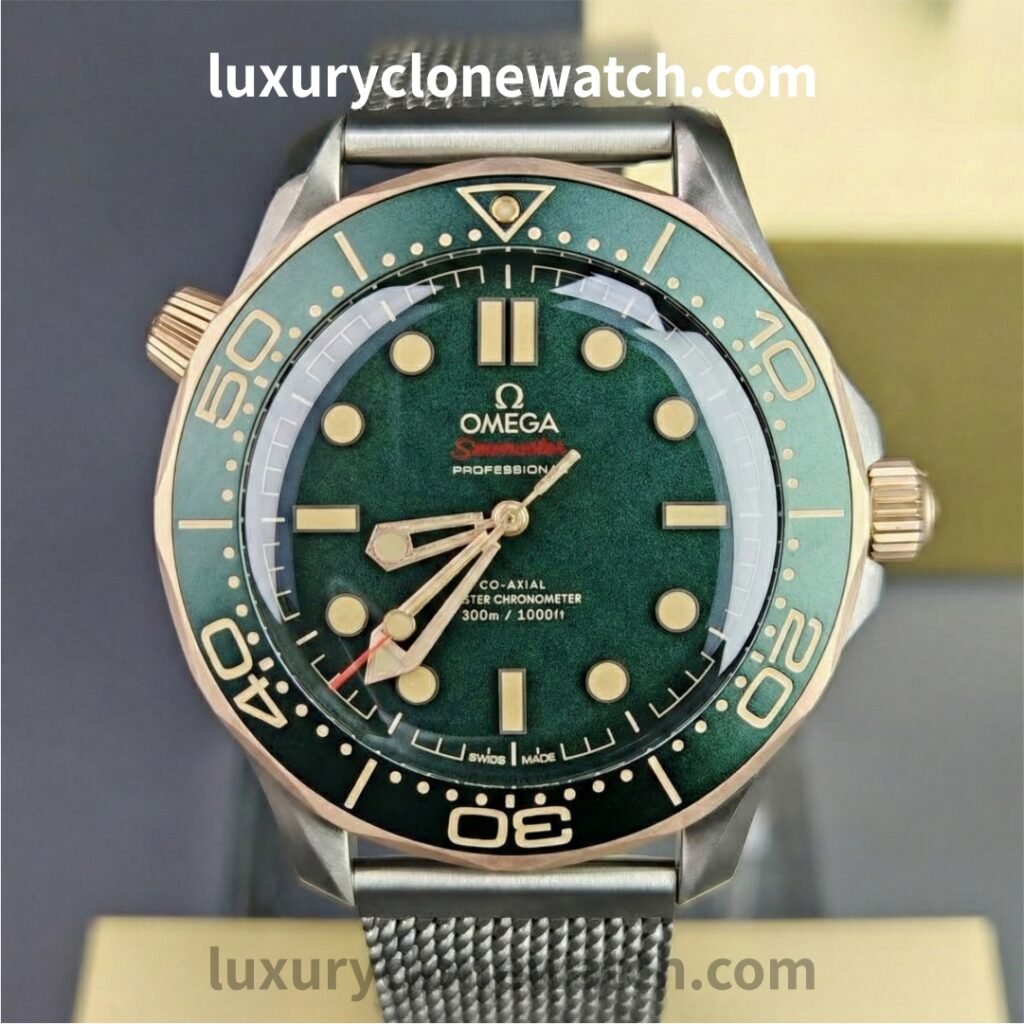
Most Copied Models: Seamaster 300M and Planet Ocean
The Seamaster 300M, especially limited editions like “Nekton” and “No Time To Die,” sees strong clone production.
The Difficulty: The Speedmaster “Moonwatch” is rarely made as a true super clone. Its Calibre 3861 movement is complex and costly to replicate accurately.
VSF dominates Omega clones and has refined case finishing and ceramic bezel detailing significantly in recent years.
5. Richard Mille
Richard Mille represents the extreme end of modern luxury watches.
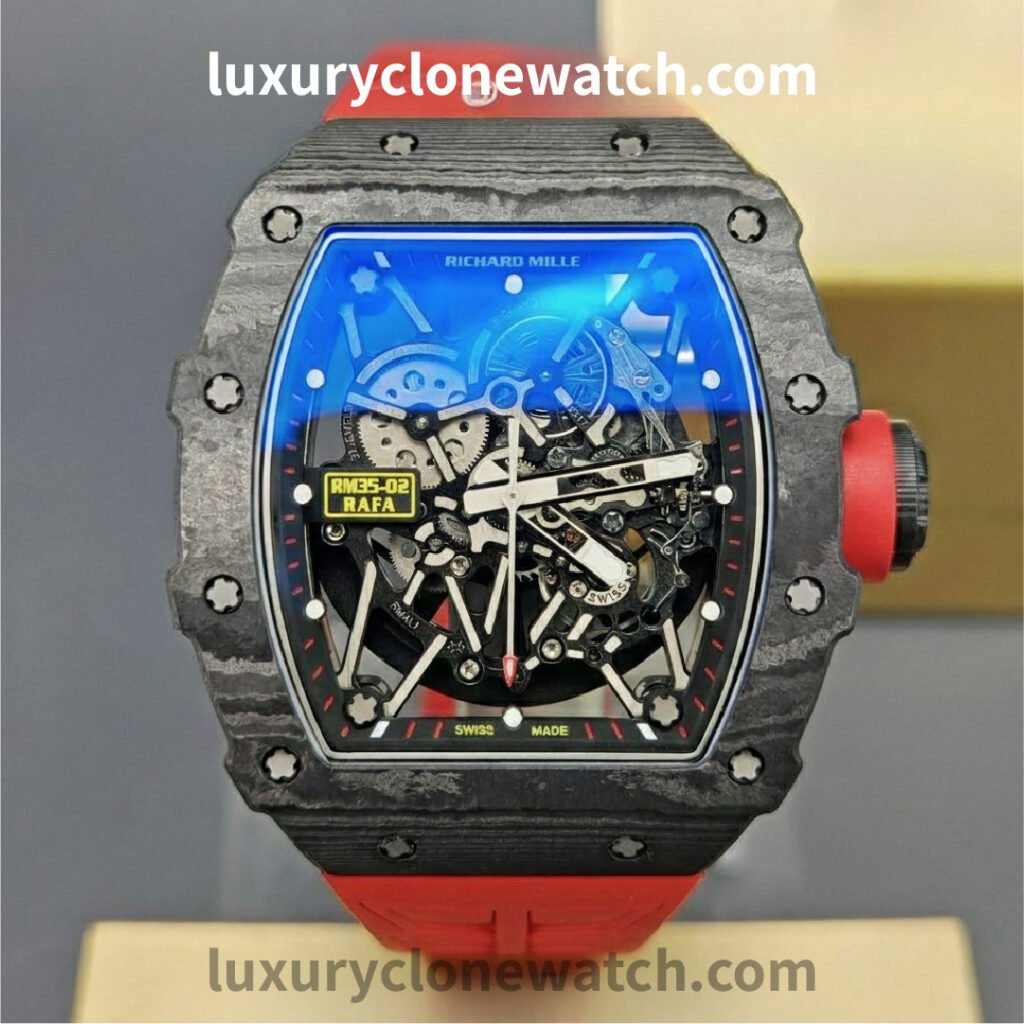
Why It’s Targeted
- Unique tonneau-shaped case
- Skeletonized dials
- Six-figure genuine pricing
The originals are often priced beyond $200,000. That naturally creates demand in the replica space.
Why It’s Harder to Clone
Richard Mille watches use complex case construction, exotic materials, and highly skeletonized movements. Replicating the visual complexity without the engineering cost is challenging.
That said, cloning has improved dramatically in recent years, and RM models are becoming increasingly common in the high-end super clone segment.
Replication Comparison Table
| Brand | Replication Accuracy | Difficulty in Spotting | Primary Factory |
|---|---|---|---|
| Rolex | 98% (Extremely High) | Needs a microscope | VSF / Clean |
| AP | 95% (High) | Dial texture is the giveaway | ZF / APSF |
| Patek Philippe | 94% (High) | Movement decoration | 3K / PPF |
| Omega | 92% (Medium-High) | Case thickness varies | VSF |
| Richard Mille | 88–90% (Moderate-High) | Case construction & skeleton details | ZF/BBR |
If you’re curious which models dominate buyer demand right now, see our breakdown of the top ten super clone watches.
Other Frequently Replicated Brands
While the five above dominate, several others maintain a steady presence:
- Cartier – Tank and Santos models are simple, elegant, and easier to replicate due to quartz and straightforward mechanical movements.
- Hublot – Popular for bold designs and celebrity appeal.
- TAG Heuer – Often replicated at lower tiers rather than full super clone level.
These brands are present in the replica ecosystem but don’t dominate the high-end clone engineering segment like Rolex or AP.
What Makes a Brand Attractive to Super Clone Watchmakers?
Several consistent patterns appear across the market:
1. Design Simplicity vs Complexity
Simple case geometry is easier to reproduce. Ultra-thin or skeletonized movements increase cost and difficulty.
2. Movement Availability
Factories rely on:
- Clone in-house calibers
- Modified ETA movements
- Miyota movements
When a movement can be mirrored efficiently, replication accuracy rises dramatically.
3. Social Media & Celebrity Influence
Luxury watches worn by athletes, musicians, and actors drive demand. Visibility fuels aspiration.
4. Price Gap
The larger the gap between retail price and production cost, the stronger the incentive to replicate.
- A $10,000 watch creates interest.
- A $200,000 watch creates a market.
Conclusion
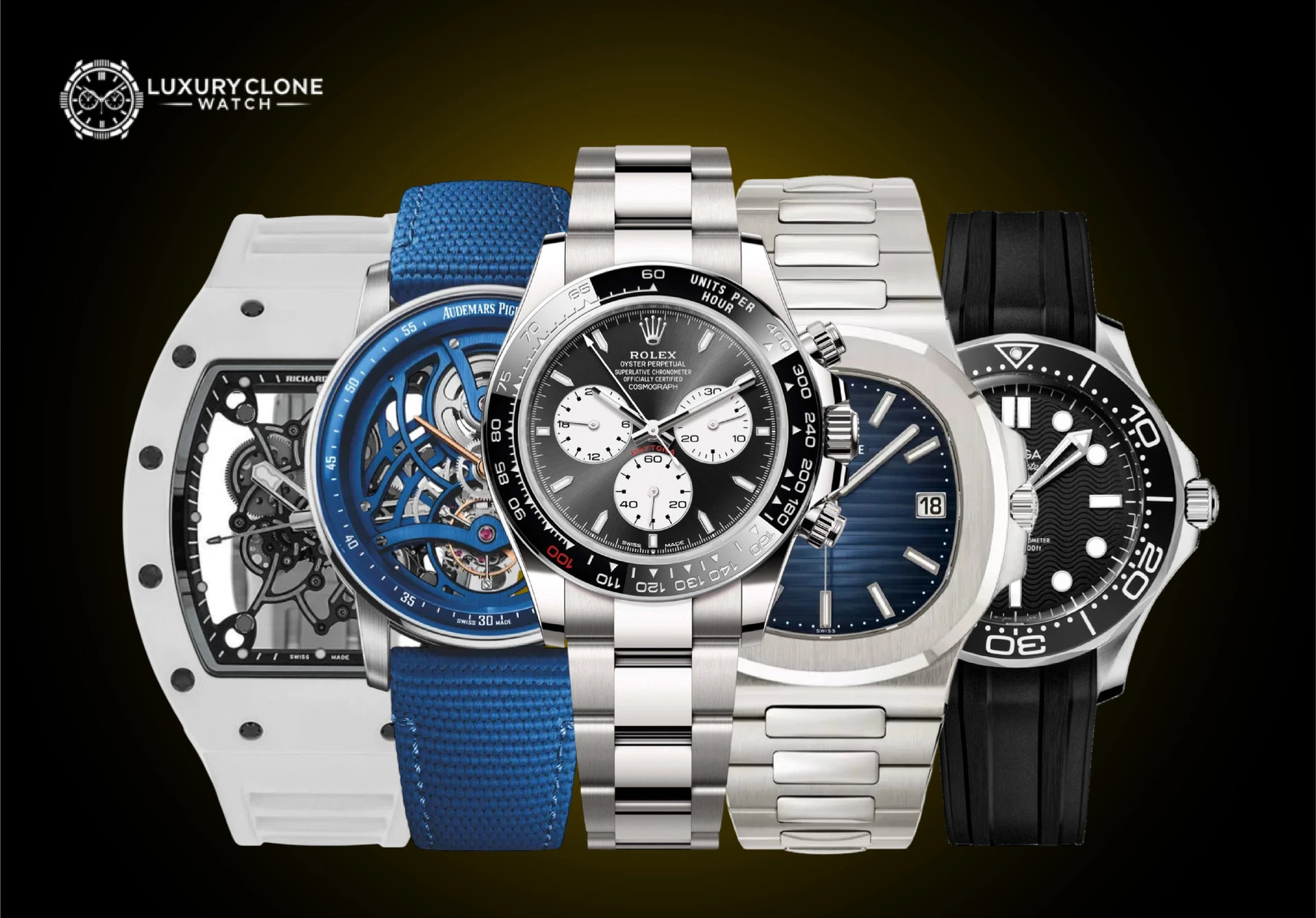
When analyzing the best superclone watch brands, the hierarchy is clear:
- Rolex — undisputed leader in volume and refinement
- Patek Philippe — driven by Nautilus demand
- Audemars Piguet — finishing-focused replicas
- Omega — dive watch heavy
- Richard Mille — growing presence
These brands dominate the super clone watch brands landscape because they sit at the center of modern watch collecting culture. Scarcity, prestige, and resale value all play a role.
If you’re considering buying a super clone Rolex, AP, Omega, or any other brand, it’s worth understanding movement variations and factory differences first.
The market continues evolving as factories improve clone movements and case finishing. Whether someone is interested in mechanical design, horology, or the economics behind luxury watches, understanding which brands are most replicated reveals a lot about demand itself.